ADAPTIVE ECOLOGICAL RESTORATION IN DISTRIBUTION AREAS OF MESOCLEMMYS DAHLI

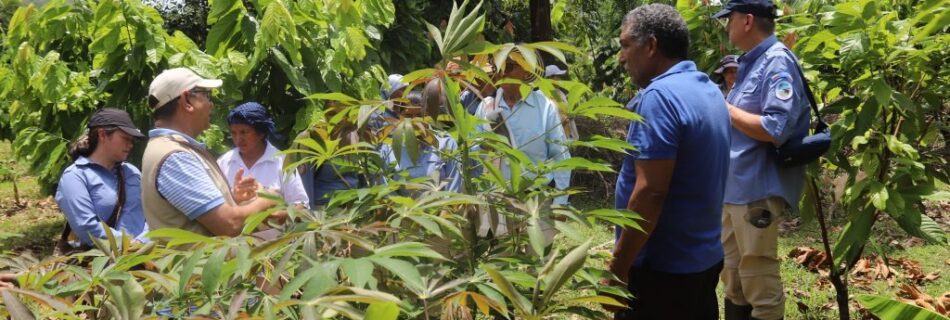
ABSTRACTDahl’s sea turtle (Mesoclemmys dahli) is a freshwater species endemic to the tropical dry forest (TDF) of the Colombian Caribbean. Its historical distribution is limited to drainage systems associated with floodplains, seasonal streams, and riparian forests in the departments of Córdoba, Magdalena, Atlántico, and Bolívar. It is categorized as Critically Endangered (CR) by the International Union for Conservation of Nature (IUCN) due to intense anthropogenic landscape transformation, loss of ecological connectivity, reduction of dry forest cover, hydrological alteration, and pressures from productive land use. The species exhibits an ecology closely linked to temporary and permanent aquatic microhabitats, with activity cycles conditioned by the climatic seasonality characteristic of the TDF.Between 2022 and 2024, local initiatives were implemented for the conservation of M. dahli populations. *M. dahli in the streams that drain into the Ciénaga Grande complex, in the municipality of Lorica (Córdoba), through participatory processes with rural communities. As a result, community conservation agreements were established, facilitating the ecological restoration of approximately 45 hectares of riparian forest, a critical habitat for the species and a strategic water source for local communities. The actions implemented included controlling stress factors in riparian zones (such as overgrazing and deforestation), establishing more than 3,700 propagules of native and threatened forest species, rehabilitating degraded productive areas, and promoting sustainable production systems compatible with conservation. Simultaneously, the documentation of local ecological knowledge about the biology, behavior, and habitat use of M. dahli was strengthened, integrating traditional knowledge into monitoring and adaptive management processes. These interventions contributed to strengthening territorial governance for conservation, promoting community co-responsibility in the protection of the tropical dry forest and the socio-ecological resilience of aquatic systems associated with the species.

SYSTEMIC FEASIBILITY STUDY FOR POTABILIZATION OF WATER FROM THE SAN JORGE RIVER^J POWERED BY PHOTOVOLTAIC SOLAR ENERGY

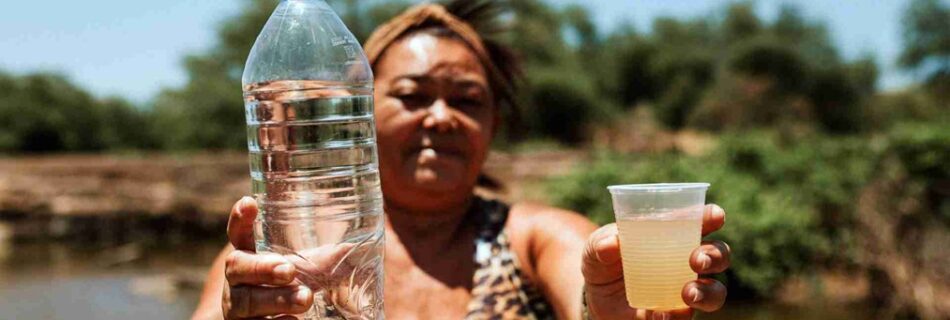
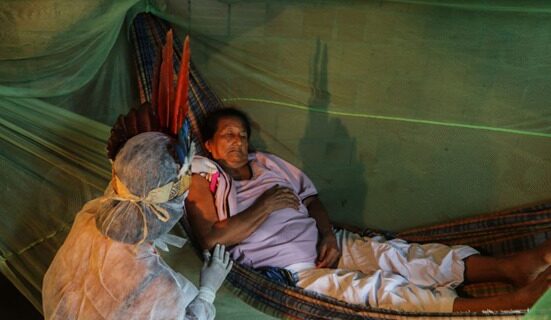
This preliminary study aimed to diagnose the conditions of access to, quality of, and use of drinking water in Indigenous communities located along the banks of the San Jorge River, as well as to evaluate the technical, environmental, and climatic feasibility of implementing a water purification system powered by photovoltaic solar energy. The research was conducted by an interdisciplinary team from the ECOCEANOS Corporation, in collaboration with experts from the University of the Caribbean and the University of Córdoba, through fieldwork, direct observation, and technical analysis of the territory. The study identified a recurring public health problem associated with the consumption of untreated water, resulting from direct river intake and the absence of water purification systems in the communities evaluated. This situation particularly affects pregnant women, who are at greater risk of contracting waterborne diseases such as toxoplasmosis, as well as children and the elderly. Additionally, climatic conditions, solar radiation levels, and average temperatures in the area were analyzed to determine the feasibility of operating a photovoltaic system as the primary energy source. The results confirmed that the territory has favorable conditions for solar power generation, thus providing technical support for the implementation of an autonomous water extraction and purification system. This preliminary study served as the basis for the project design, ensuring its social, health, and technical relevance.

COMMUNITY PLAN FOR THE CONSERVATION OF GIANT MANTA RAY ON THE COLOMBIAN PACIFIC COAST

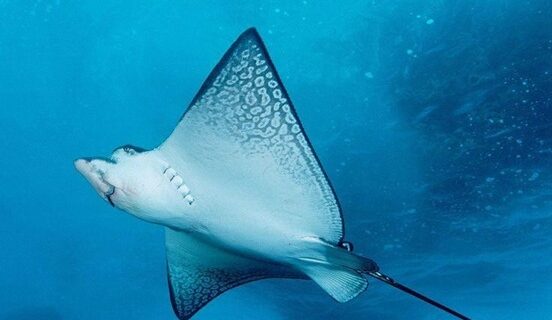
RESUMENStingray populations in the Colombian Pacific are being decimated to the point of extinction. The giant stingray (Mobula birostris) has become a target for small-scale Emberá indigenous fishermen. Poaching of marine rays off the Colombian Pacific coast continues unabated, but today, instead of traveling with nets, poachers simply buy live rays stored by local fishermen (Emberá indigenous people) who hide them on remote islands or in mangrove creeks. Since rays need to breathe, poachers keep them in rectangular cages built locally from floating drums and wood, with nets suspended in the center, or tied or chained directly to coral in shallow waters. The costs and resources required to inspect this vast area are prohibitive for local security agencies and logistically complex. Through this plan, we seek the comprehensive protection of the giant ray by strengthening the conservation capacities of the Emberá indigenous community, with strategies for conservation, education, sustainability, and communication.The end result will be an improvement in the conservation status of the target ray species through population growth and the mitigation of threats they face on the Colombian Pacific coast. Key words: Ray populations, Colombian Pacific coast, protected marina area, Emberá indigenous community.

BLOOMING MIND PROGRAM: NATIVE ORNAMENTAL HORTICULTURE FOR EDUCATIONAL AND SOCIAL TRANSFORMATION

SUMMARYThis five-year program (2025-2030) proposes native ornamental horticulture as an innovative pedagogical and bioclimatic strategy for schools in the Colombian dry Caribbean. We have demonstrated, based on international and local evidence, that the implementation of school gardens with ornamental species typical of the region can generate significant impacts.The data indicate that these green spaces can increase students’ attention by up to 25% and reduce their stress levels by 20%. In addition, the presence of native flora in school gardens has a positive effect on local biodiversity, doubling the presence of pollinators.The study details the theoretical foundations that underpin this initiative, a rigorous selection process of species adapted to the dry Caribbean ecosystem, the phases of implementation of the program and the evaluation mechanisms to measure its effectiveness. In essence, we offer a replicable roadmap that fuses the beauty of native vegetation with applied science and the active participation of the educational community, creating more enriching and sustainable learning environments.Keywords: ornamental horticulture, pedagogical strategy, student care, stress reduction, local biodiversity, native flora, community participation, learning environments, sustainability.

CARE, CULTURE, AND PREVENTION: COMMUNITY SEXUAL HEALTH STRATEGY IN THE MONTES DE MARÍA, FOR ZENÚ INDIGENOUS YOUTH.

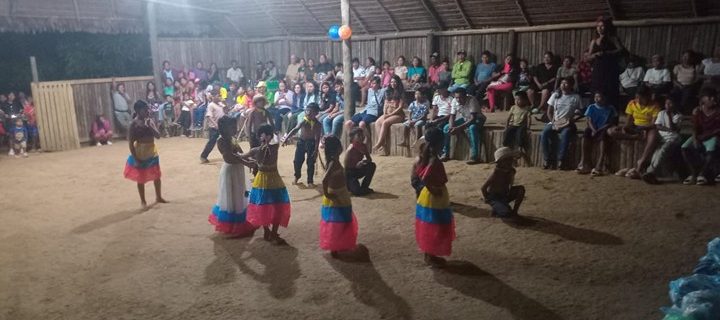
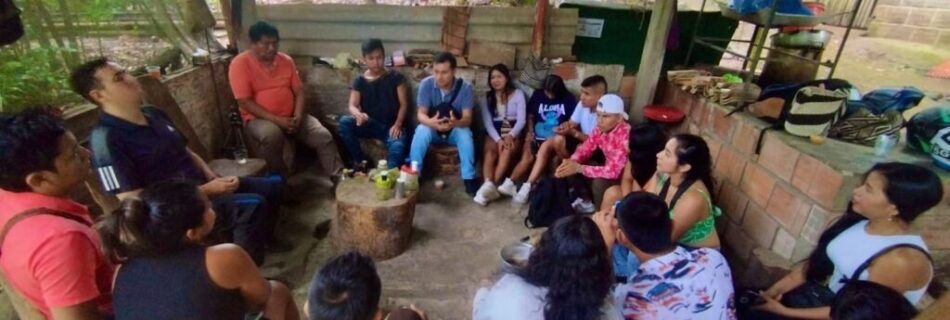
SUMMARYThis scientific article describes the implementation and evaluation of a preventive and reproductive health project carried out by the Ecoceanos FOUNDATION in three Zenú indigenous communities in Montes de María, Sucre, Colombia. The project, developed between March 2024 and March 2025, addressed critical needs in adolescent sex education and in maternal health, family planning, and menstrual health for adult women. Through a participatory methodology and an intercultural approach, it was possible to directly impact approximately 1,150 people, of which 450 were adolescents and 700 adult women. The results indicate a significant 65% increase in knowledge about sexual and reproductive health in adolescents and a 58% increase in knowledge and adoption of healthy practices in women, reflecting an estimated 20% reduction in unwanted adolescent pregnancies and a 35% increase in the use of family planning methods. The collaboration of 20 indigenous leaders was instrumental, amplifying the message to an estimated network of more than 3,000 people by word of mouth. This project underscores the effectiveness of a project management model that integrates cultural respect, community participation, and local leadership as pillars for the sustainability and success of health interventions in indigenous contexts.Keywords: Preventive health, reproductive health, Zenú indigenous communities, Montes de María, sex education, maternal health, family planning, menstrual health, project management, intercultural approach.

PROGRAM TO SUPPORT COMPREHENSIVE CARE FOR WOMEN VICTIMS OF VIOLENCE ON THE CARIBBEAN COAST OF COLOMBIA

In order to help meet the objectives, challenges and goals of the Ecoceanos foundation in the areas of women and gender, this project is developed for the comprehensive care of women victims of violence, which aims to place the gaze of society and institutions in general towards women as subjects of law, and with full guarantees for the integral development of their human dignity. From the very conception of the development plan, and its execution through different planning, prevention, attention and support programs for groups and networks (up to now), women have made significant progress in terms of awareness, productivity, associativity and participation in urban and rural areas at the administrative, political, business and community levels. However, the numbers of gender-based violence (GBV) and other forms of violence continue to grow for various reasons that are based on the lack of knowledge of current regulations by men and women, as well as cultural conditions and structuring factors such as sexism, exclusion and discrimination, among others. This situation, which occurs in general, is worsened to a great extent by the lack of denunciation by women, the loss of self-confidence, family disarticulation and lack of affective and effective communication within the couple (above all). That is, there is still a low self-esteem that does not allow them to see much beyond their daily lives and personal experience, leading them to silently carry (in most cases) a suffering that they do not deserve, but from which they can get out, if working together depends on it. This shows that there is a need to redouble efforts to guarantee more humane institutional strategies, in order to continue advancing towards the ideal of a Quindio free of violence, especially towards women and their family members. Consequently, in accordance with the postulates expressed in the Development Plan, which contemplates the creation of the integral attention project, and which has been working in phases, this being the collection of the accumulated institutional and social experience in a single proposal of an integrating nature, as required by the moment, the population, the territory and the socio-political planning of the coast. For this reason, the Gender and Women’s Equity Office of the Family Secretariat of the Ecoceanos Foundation proposes a comprehensive strategy to help women victims to overcome their hopelessness, self-esteem, love and respect for themselves and be respected, a project that integrates actions that become their support network in all senses; legal, social, psychological, economic and cultural, strengthening the existing ones in each woman and potentiating their creative and creative skills, leadership, management and above all stabilizing the family, business and society.

AGEAS AND AEDES MOSQUITOES: DEADLY THREAT PRESENT IN THE EMBERA KATIO COMMUNITY IN TIERRALTA, COLOMBIA.

SUMMARY The Embera Katío indigenous community in Tierralta, Córdoba, is facing a serious environmental and public health crisis due to the accumulation of plastic waste and the lack of an efficient solid waste management system. The absence of adequate public policies has led to unsustainable practices, such as burning garbage, which releases toxic substances and causes respiratory diseases. In addition, the accumulated plastics retain stagnant water, creating ideal breeding grounds for the Aedes aegypti mosquito, which transmits dengue and Zika. In 2023, 4,300 cases of dengue were reported in the area, an increase of 132% compared to the previous year. In 2022, Ecoceanos managed to achieve a plastic compacting machine, reducing the volume of waste by 70% and generating local jobs. However, the instability of the electricity supply and high operating costs have limited its effectiveness. This document analyzes the problem, proposes technical and social solutions, and evaluates the expected results. The solutions include stabilizing the electricity supply, using renewable energies, optimizing the compaction system, and strengthening the circular economy. An 80% reduction in the volume of waste, a significant decrease in cases of dengue and Zika, and the generation of local jobs are expected. This comprehensive approach seeks to improve the quality of life of the community, protect the environment and respect the Embera Katío culture.Keywords: Plastic waste, public health, Embera Katío, dengue, circular economy, waste management, renewable energy, environmental pollution.

ILLUMINATING LIVES: HOW SOLAR ENERGY CAN BREAK THE CYCLE OF SOCIAL EXCLUSION AND TRANSFORM THE FUTURE OF AFRO-DESCENDANT CHILDREN IN PITA ABAJO

SUMMARY This study analyzes the situation of children in the rural Afro-descendant community of Pita Abajo, Colombia, where 75% of students drop out of school before completing secondary education due to lack of electricity and adverse learning conditions. The high temperatures, which reach up to 38 °C during the day, make it difficult to concentrate and generate demotivation in 90% of the students interviewed. In addition, there has been a worrying increase in teenage pregnancies, with 25 cases reported in children under 15 years of age in the last two years. 40% of children outside the education system end up being linked to illicit activities, including micro-trafficking and participation in illegal armed groups. This study proposes as a solution the installation of a photovoltaic system composed of 15 solar panels, 5 batteries, and 3 inverters to energize the community school. This system will ensure continuous access to renewable energy, improving study conditions and mitigating critical social issues. Energization with solar energy is proposed as a sustainable measure to transform the educational and social reality of Pita Abajo.KEY WORDS: Afro-descendant community, children, school dropout, photovoltaic system, education.