CONSTRUCTION OF A DRINKING WATER TREATMENT PLANT FOR THE ZENÚ INDIGENOUS COMMUNITY IN PURÍSIMA, COLOMBIA.

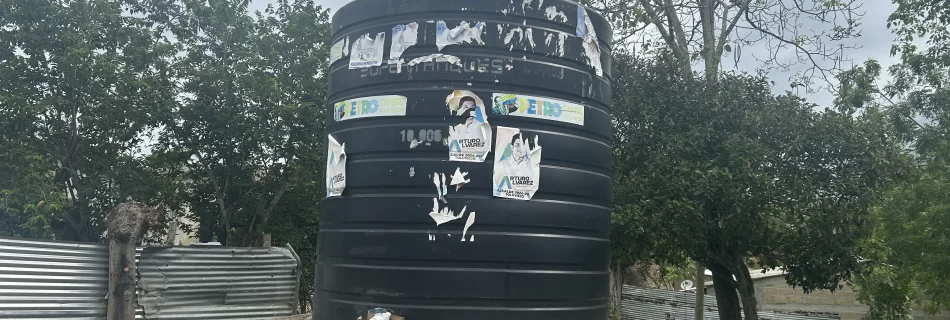
SUMMARYThis article presents the initial living conditions of the members of the Zenú indigenous community, among these conditions are the water supply for consumption, health, welfare and environmental conditions. This community is located in lands adjacent to the Purísima village, in which they do not have the supply of basic sanitary services (drinking water, electricity, gas, among others) for the development of life and other activities related to it. According to the above, the Zenú indigenous community lacks the necessary conditions for the development of a good quality of life, emphasizing the precarious water supply system they have, as this has brought with it different environmental, social, economic and health problems, since the liquid is not received with the quality parameters established by the Colombian technical standards. Due to this problem identified in the indigenous community, a sanitary solution was proposed, which consisted in the construction and start-up of a raw water treatment plant, in order to improve the quality of life of the inhabitants, reduce diseases, improve the development of economic activities, prevent internal conflicts, etc.Key words: Drinking water, Indigenous community, Health, Environment, wellbeing.

CRITICALLY ENDANGERED PACIFIC SPECIES: TRAFFICKING AND SALE OF MEAT IN THE MARKET OF QUIBDÓ, COLOMBIA.

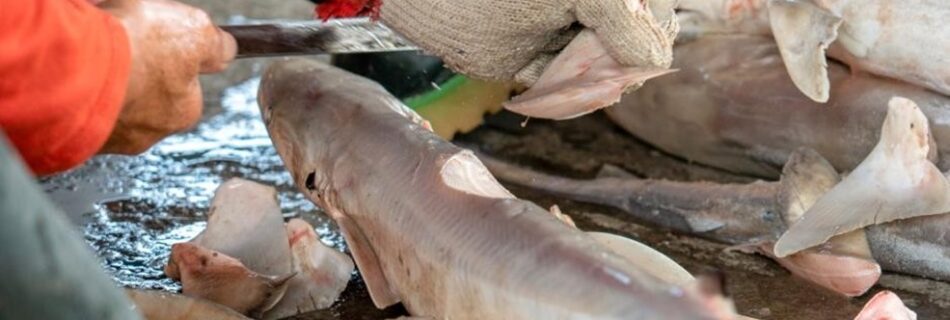
SUMMARY The lack of regulation in the monitoring of shark trade by species is a major challenge that Colombia shares with several countries in the world, mainly due to the difficulties to identify at the species level, using the shark parts traded (dried fins, meat and processed). To address these conservation and management problems, in the present study we applied a multiplex polymerase chain reaction (PCR) assay with species-specific primers based on the ITS2 ribosomal region. In addition, we characterized the shark meat trade in the wholesale market of the city of Quibdó, Colombia, which functions as a collection center for the trade of this product. Results based on the identification of tissues by multiplex PCR reveal that the trade is composed of at least two species. Oceanic whitetip shark (Carcharhinus longimanus) and pelagic thresher shark (Alopias pelagicus). A total of 93.26% (n=138) of the samples analyzed corresponded to species listed in one of the IUCN threat categories. The molecular technique applied in this study has proven to be reliable, fast and useful for the identification of shark species, making it a key tool for strengthening traceability systems and the chain of custody of shark products. KEYWORDS: CONSERVATION, TRADE, GENETIC IDENTIFICATION, QUIBDÓ, ITS2, PCR MULTIPLEX, SHARKS, IUCN.

INCLUSION OF RENEWABLE ENERGIES FOR ZENÚ INDIGENOUS COMMUNITIES IN SAN ANDRÉS DE SOTAVENTO, COLOMBIA.

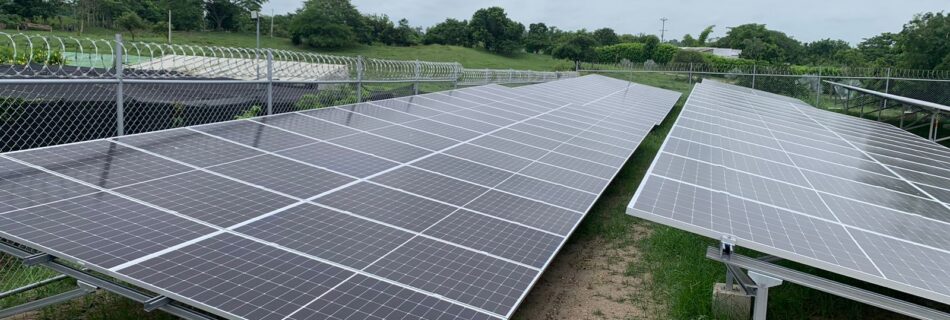
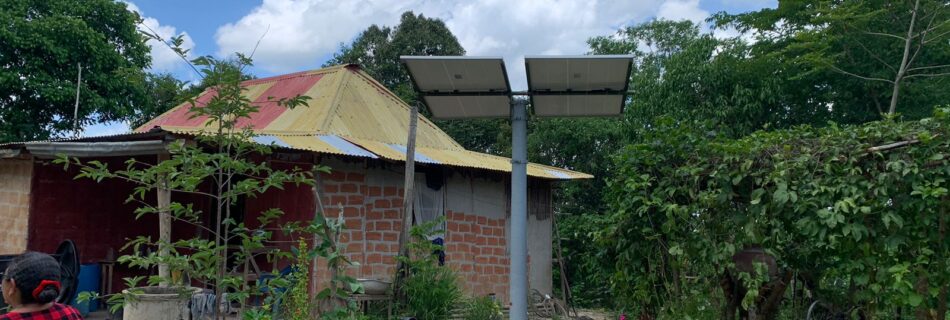
In 2021, the ECOCEANOS Corporation works in agreement with the Zenú indigenous community, located in the reservations of San Andrés de Sotavento, Colombia. This project aimed to include renewable energies for the mitigation of the effects of climate change, in the indigenous reservation that is home to 500 families, located 2 km from the Colombian Atlantic coast. The indigenous reservation is plagued by problems of basic needs; Among them, having electricity, vital to have access to social, professional and cultural opportunities. The ECOCEANOS Corporation and the University of the Caribbean carry out the installation of 50 photovoltaic kits to benefit 50 artisan indigenous mothers, thus having access to sewing machines for fabric manufacturing, hat making and also being able to cook in electric stoves in favor of the environment. This project impacts the community significantly, providing decent work opportunities (micro-enterprises) and capacity to participate in the development, implementation and evaluation of sustainable policies and measures aimed at combating climate change.

ANNUAL REPORT 2022

Dear partners,It is our pleasure to address you at this time to express our deep appreciation for your continued efforts in environmental conservation.Thanks to their dedication and commitment, we have achieved a number of important goals in protecting the environment. Thanks to your support, we have been able to implement a series of effective measures to reduce our carbon footprint, protect our ecosystems and promote sustainable development.Reforestation projects, the creation of protected areas and environmental education for local communities are just a few examples of the achievements we have achieved together.We are proud to work with a group of people so committed and dedicated to the cause of environmental conservation. Together, we are confident that we can continue to make a significant difference in the world.THE ECOCEANOS CORPORATION continued with its mission of protecting, conserving and restoring the Zenú indigenous culture by working together with our local allies, donors and strategic partners, during 2022. We managed to exceed the annual reforestation goal, expand our marine conservation areas, monitor species in danger and bring help to the most disadvantaged communities, which are the strong arm of our actions on the ground.We appreciate the valuable contribution of all the people who were part of these achievements.A sick planet shows us its symptoms and the aggressive response of our society to reactivate the world economy puts the sustainable use of natural resources at risk. This panorama is the preamble of a social change to understand the importance of nature in the stability of the planet. The next few years remain challenging, but one thing is certain: we can overcome the challenges, we have the opportunity to save our home, the Earth, conservation cannot stop.A big hug to all, let’s keep taking care of ourselves. ANNUAL REPORT – ECOCEANOS Descargar / DOWNLOAD PDF

DESIGN OF A MARINE PROTECTED AREA FOR PUNTA COMISARIO, SAN ONOFRE, SUCRE, COLOMBIAN CARIBBEAN COAST.

SUMMARYBased on an ecoregional planning exercise for the selection of priority conservation sites in the Colombian Caribbean and the qualification of ecological criteria, the ECOCEANOS Corporation identified Punta Commissioner on the coast of Colombia as a potential site for the establishment of a marine protected area (MPA). This area presents a mosaic of marine and coastal ecosystems that cover countless fish, planktonic, benthic communities and species that, together with the environment, constitute an area of high heterogeneity and unique biodiversity in the department of Sucre, Colombia. The purpose of this work was to design an MPA in agreement with the Zenú indigenous community that inhabit the coasts of San Onofre, based on the evaluation of ecological criteria, conservation objectives and proposed management; postulating a management category within the current National System of Protected Areas (SINAP). Therefore, based on secondary information and following The Nature Conservancy’s methodological scheme for “Five S Scheme” site planning, five coarsely filtered conservation objects (OCs) or habitats were identified: coral formations, phanerogam meadows, sandy beaches, rocky coastline and mangrove forests. White mangrove (Laguncularia racemosa), red mangrove (Rhizophora mangle), which are in danger of extinction, their presence is conditioned to high water tables and exchange of fresh and saline water, other species present are: Zaragoza (Conocarpus erecta), Smoke mangrove (Avicennia germinans). In the area we also find fish; such as sawfish (Pristis pectinata), tarpon (Megalops atlanticus), guasa grouper (Epinephelus itajara), which are critically endangered. A feasibility analysis was developed for each object finding the area in a good state of biodiversity health. The analysis of criteria, the feasibility and the definition of the management objectives of the area allowed to postulate the management category “National Natural Park” as the most appropriate for the area. On the other hand, from a systematized process and with the help of a decision support system (SSD) called MARXAN (University of Queensland), three intangible zones were identified with which the minimum protection of 30% coverage of each of the objects is guaranteed, as an initial contribution to the internal zoning of the MPA. Key words: Marine Protected Areas, Gulf of Morrosquillo, Biodiversity, MARXAN, National Natural Park.

BIOREMEDIATION OF THE COLOMBIAN ATLANTIC COAST OF SEDIMENTS FROM CONSTRUCTION WASTE

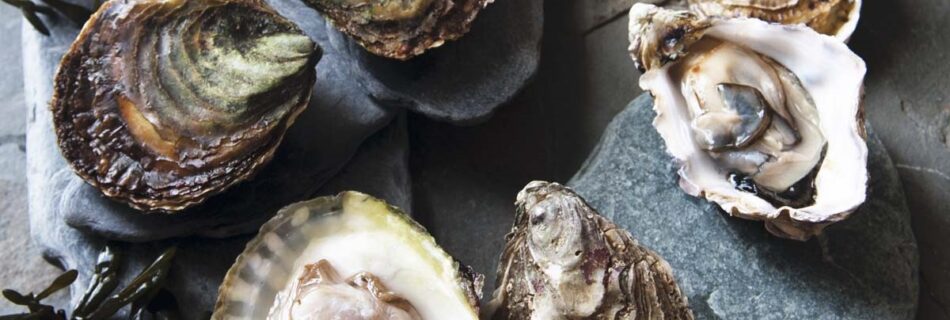
This study addresses the marine restoration of 65Km2 of mangrove forests, on the Colombian Atlantic coast. These ecosystems are very complex with multiple ecological functions and high economic value. They are also ecosystems that are subject to various negative impacts, which is causing their disappearance at an annual rate that ranges between 5 and 15%. One of the most negative impacts is generated by the spillage of construction waste with its consequent damaging effect on several of its subsystems: trees, associated fauna, microorganisms (aerobic and anaerobic), soil and water. This study offers a discussion of the most up-to-date results on bioremediation with reforestation with red mangrove trees (Rhizophora mangle) and mangrove oysters (Crassostrea rhizophorae) pollution of mangroves by spills of construction waste from the increase of infrastructure for tourism in the coasts of the departments of Sucre and Cordoba. Likewise, we review and discuss the various bioremediation, phytoremediation and restoration strategies that allow us to provide a response in the short and medium term. Most of the coasts contaminated with pollution residue, generate acidic pH, bleach corals, and the sediment liquids marine biodiversity. In order to accelerate the restoration process, biostimulation (addition of nutrients or degradation-stimulating compounds) and bioaugmentation (addition of microbial strains with special attributes to degrade pollutants) have been investigated. Another limiting factor for the degradation of construction waste to occur in mangrove sediments is the lack of oxygen. The most current information indicates that the biostimulation strategy, complemented with aeration, is one of the best treatment options. Keywords: construction waste, biostimulation, bioaugmentation, natural attenuation, biodegradation, tourism, mangroves, oysters.

MALNUTRITION OF THE AQUATIC AND TERRESTRIAL ECOSYSTEMS OF THE COLOMBIAN CARIBBEAN: ONE OF THE MAIN PROBLEMS OF USE OF GLYPHOSATE IN THE FUMIGATIONS OF ILLICIT CROPS BY THE GOVERNMENT OF COLOMBIA.

RESUMEIn the present study carried out in 2022, it was characterized by evidencing the environmental impact on aquatic ecosystems of the use of herbicides such as glyphosate, which is largely used to eradicate illicit crops in Colombia. In the research, the Ecoceanos Corporation managed to characterize the poor state of health in 4 species of fish and 3 species of mangroves. Physiognomic aspects of the forest and its health index were evaluated. 78 interviews were conducted with people who are part of Indigenous Zenú communities in the settlements near the areas studied on the Island of Barú, Bolívar – Colombia to evaluate the knowledge and community behavior about the mangroves and fish that were part of their food and economy. It was identified in the mangroves sedimentation of residues, Arboreal degradation, high salinity and decrease of nutrients, in the species of fish investigated we evidenced signs of toxicity and mortality. In response to this study, the Ecoceanos Corporation was able to determine mitigation and restoration strategies for the affected ecosystems to carry out impact projects that improve the community conditions of the Zenú Indigenous Communities. Keywords: Keywords: Glyphosate, fumigation, Illicit crops, Ecosystems, Mangroves, Environment.

CONSERVATION PROJECT FOR 2 ENDANGERED SPECIES OF TREES IN MOMIL COLOMBIA

SUMMARY This project aimed to intervene a process of reforestation through the planting of 2 species of trees that are in critical danger due to climate change and human activity, so the ECOCEANOS corporation carried out this project in order to recover part of the tropical dry forest located in the municipality of Momil,  corregimiento of Córdoba, Colombia, improving the socioeconomic conditions of the Zenú indigenous community present there, which have been for years settlements of scarce resources that subsist on what is produced by nature for the maintenance of livelihoods, the production of food, handicrafts, fishing and tourism. The project “CONSERVATION PROJECT FOR 2 ENDANGERED SPECIES OF TREES IN MOMIL COLOMBIA” began in 2014 by the ECOCEANOS corporation with the help of the Zenú de Momil indigenous community which was the main influenced in order to intervene in the process of urban deforestation and recover tropical dry forests, while improving the socio-economic conditions of families. The project was completed in 2018 in the company of local staff, hired and trained by community leaders through resident associations, with the aim of increasing job opportunities in the areas affected by the initiative. KEY WORDS: Water resource, climate change, environmental damage, biodiversity, native plants, reforestation, community.

ANTIEROSIV GARDENS PLAN: CLIMATE CHANGE MITIGATION AND ADAPTATION STRATEGY FOR APPROXIMATELY 50 KM OF BEACHES ON THE COLOMBIAN ATLANTIC COAST

The purpose of this plan was to define mitigation and adaptation strategies against climate change of approximately 50 km of beaches and 860 hectares of land and thus promote adaptation processes that reduce vulnerabilities and promote the resilience of socio-ecological systems in the coastal area of the departments of Sucre and Córdoba (Gulf of Morrosquillo),  area close to indigenous communities such as the Zenúes. Coastal erosion is considered one of the problems with the greatest impact on both indigenous communities and marine ecosystems in Sucre, about 20 km of beaches have been lost in the Gulf of Morrosquillo thanks to erosion mainly due to human causes. The urban, industrial, residential, tourist, aquaculture, road and port infrastructure that was built in the coastal beach-dune system, generated various impacts, from the alteration of a part of its structure, to its total loss. Constructions are obstacles that interrupt or divert the flow of water and sediment, which modifies the sedimentary balance. The decrease in the availability of sediment and the interruption of natural transport between the coastal dunes and the beach favors processes of erosion and retreat of the coastline. Through this plan that had a duration of 3 years, we encouraged the protection and planting of coastal vegetation of 50 km of beach impacting about 860 hectares of the Zenú indigenous territory; that benefits 400 families by enabling their resilience to climate change. protecting the dunes that constitute natural deposits of beach sands. At the same time we created an education plan for institutions on the main causes of erosion and other effects of climate change in indigenous communities of the coast through informative, promotional and testimonial talks, we created educational projects for the transfer of good practices where a work team composed of science teachers, biologists, employees of the municipal administration and experienced fishermen. We also assess the conservation status of the species that are victims of this effect, and thus record their populations on the biodiversity conservation red lists. We have the support of the Zenú indigenous community.

COMMUNITY PLAN FOR THE RESTORATION OF MANGROVE FORESTS IN MOÑITOS, COLOMBIA.

SUMMARYIn this plan we will propose strategies for the conservation and sustainable management of 1200 hectares of mangrove forest and the repopulation and enrichment of 570 hectares on the Caribbean coast of Colombia, specifically in threatened areas of the department of Córdoba, in the municipality of Moñitos. This region is under stress due to the influence of threats of anthropic origin in the area: Deforestation for agricultural and livestock activities; and climate change. Currently, the Zenú indigenous community that coexist in these ecosystems have shown interest in implementing conservation strategies and healthy productive practices with the environment, for which, the ECOCEANOS Corporation, together with representatives of the indigenous community, formulate this as a starting point in the mangrove conservation agenda. In this plan, we propose educational activities and conservation programs. The proposed afforestation and reforestation processes would be with 3 species in danger of extinction: Avicennia germinan (mangle de humo), Rhizophfora mangle (mangle rojo) and Laguncularia racemosa (mangle bobo). The results obtained from this project contain extensive information and contribute significantly to the necessary changes in the environmental culture of populations that for several generations have exploited the mangrove and its resources without clear awareness of the need, of its replacement for its sustainability and for the very life of all the biodiversity present in said ecosystem.